Locations






OzoneBio is working to commercialize a more sustainable way to produce a critical component in plastics, which it makes from wood waste and nutshells, in a process it claims is a world first.
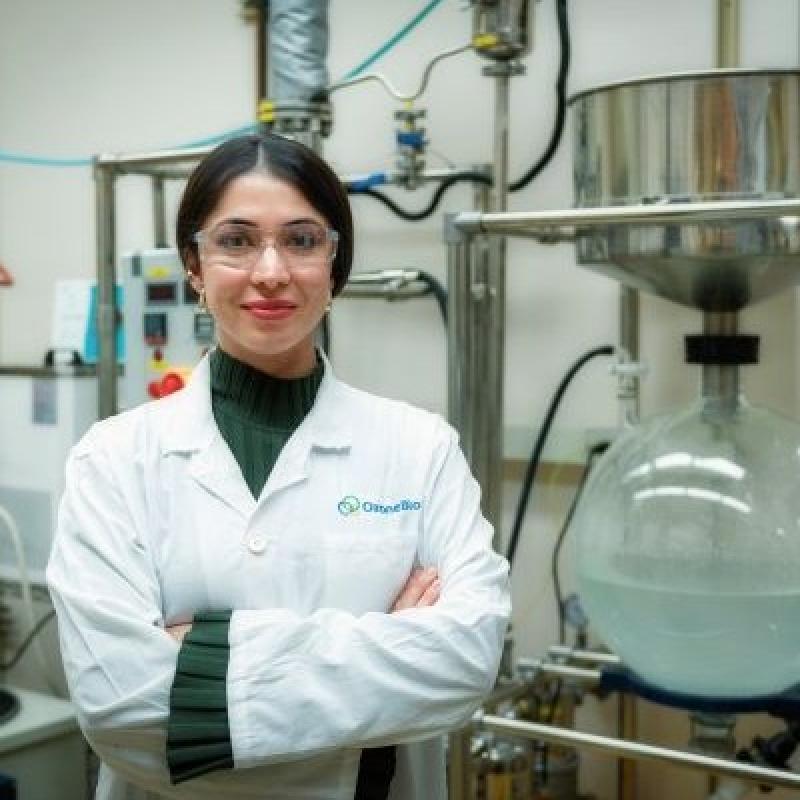
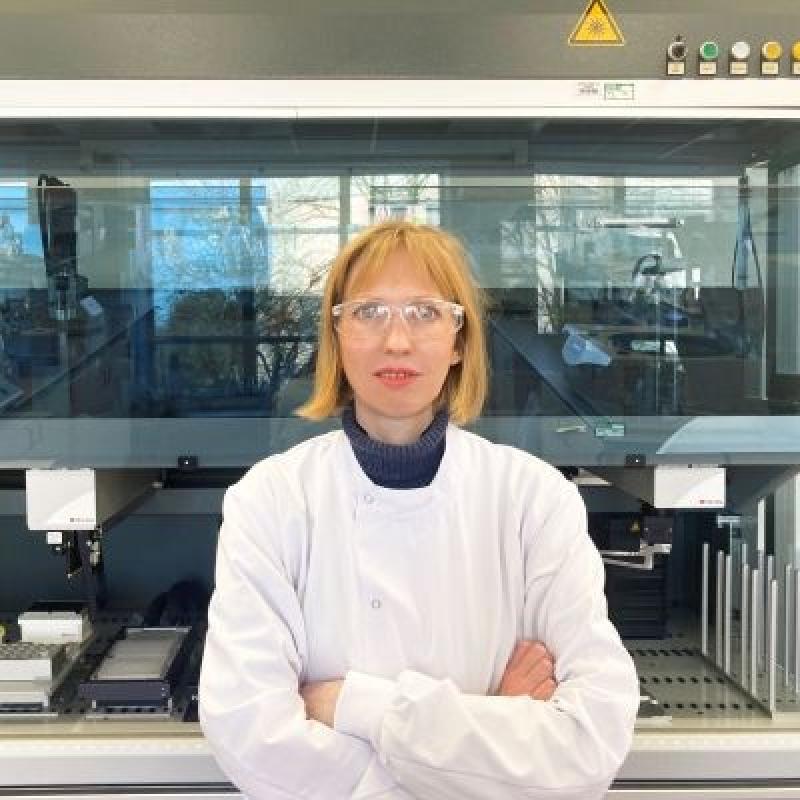
The Calgary-based green chemistry startup was co-founded in 2021 by CEO Khorcheska Batyrova and chief scientific officer Anna Khusnutdinova. Both are formerly postdoctoral researchers in biochemistry at the University of Toronto.
Applying their educational backgrounds, the duo developed a process of effectively cooking the organic inputs to generate wood tar. It is further processed to produce adipic acid, a compound used to make common plastics such as nylon, polyvinyl chloride and polyurethane. The polymers are critical in manufacturing textiles, car parts, construction materials, shoes and coatings.
Compared to the conventional method of generating adipic acid from petroleum, OzoneBio’s technology results in significantly less greenhouse gas emissions, Batyrova said in an interview with Sustainable Biz Canada.
“We’re basically replacing petroleum with wood waste and positioning ourselves as a new generation of the chemical industry.”
Currently at pilot-scale production, Batyrova and Khusnutdinova have plans to produce thousands of tonnes of adipic acid per year as a full-fledged business. Their ambition is to compete with petroleum on environmental benefits and cost.
The first bio-based adipic acid
At the root of OzoneBio’s process is the lignin-rich wood waste and nutshells it receives from producers in Northern Ontario and Brazil. After approximately 100 kilograms of the discards are heated in an oxygen-free environment, it becomes wood tar, a pitch-black, viscous liquid resembling oil. Next, the wood tar is distilled and subject to green chemistry before it is converted into approximately one kilogram of adipic acid, which takes the form of a white powder.
“No one successfully made a gram, even kilogram, of bio-adipic acid before us,” Batyrova said.
The startup’s technology avoids petroleum and the associated nitrous oxide emissions, she explained. Nitrous oxide is a greenhouse gas that is, in terms of trapping heat, almost 300 times more potent than carbon dioxide. It also erodes the ozone layer, adding another level of environmental harm.
Life-cycle assessments of OzoneBio’s technology have suggested it can eliminate up to 97 per cent of the carbon dioxide-equivalent emissions of a kilogram of adipic acid compared to petroleum, Batyrova said.
In addition to generating adipic acid, with its myriad applications in plastics, OzoneBio’s process can also output aromatic compounds such as vanilla extract or benzaldehyde.
How OzoneBio plans to compete in a crowded market
Mindful that petroleum is a non-renewable resource, Batyrova said “society should look for new alternatives, clean technologies, to be able to produce the same performance materials” without compromising on performance or lifespan.
Today, OzoneBio is able to produce up to one tonne of adipic acid per year. Its product has met the performance standards demanded by businesses, Batyrova said, and has drawn the attention of major companies in textiles, automobiles and cosmetics.
To meet anticipated demand, OzoneBio has laid out a commercialization plan. The company is in touch with government funding sources to support the construction of a demonstration-level unit in Calgary to churn out up to 50 tonnes of adipic acid per year.
That scale of production would be enough to make limited editions of goods such as handbags, sportswear and vehicle airbags to illustrate the commercial viability of the technology, Batyrova said.
If the funding is secured, OzoneBio expects construction of the demonstration unit could start as early as March and for operations to start by the end of 2026.
The next step is to open a Series A fundraise between Q3 2026 and early 2027 which would further supplement the project.
At full commercialization, OzoneBio is aiming to produce 25,000 tonnes of adipic acid per year. At that scale, the company would be able to keep up with petroleum-based production, Batyrova said.
While the company’s adipic acid will likely have a slight cost premium compared to counterparts derived from oil, Batyrova is hopeful OzoneBio can reach price parity from beneficial policies such as carbon border taxes in the European Union.
To overcome the potential challenge of competing with the oil industry on price, OzoneBio’s strategy is to educate customers on the environmental benefits of its product. To this end, OzoneBio will be showcasing nylon made from its process at a London fashion show in January, and in plastics and textiles industry events around the world.


 Industry Events
 Locations