
 Locations



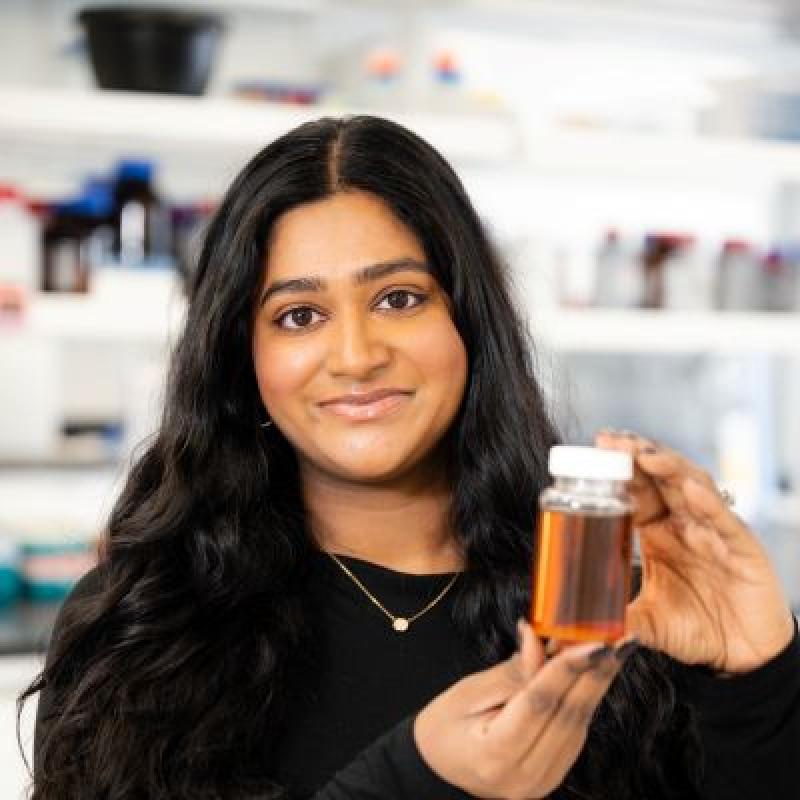
A new line of cleaning products from Hamilton-based Project Clean is made using a key ingredient based on food waste produced by Dispersa, promoting circularity in the industry.
The product family for the institutional and industrial markets is based on PuraSurf M, Dispersa's flagship biosurfactant. PuraSurf M can replace petroleum- and palm oil-based surfactants with one derived from waste oils and sugars generated by the food and agriculture industries.
The partnership boosts the sustainability and circularity of Project Clean’s products, Nivatha Balendra, founder and CEO of Laval, Que.-based Dispersa, said in an interview with Sustainable Biz Canada.
“We’re not only using something that’s natural,” she said, “we’re actually diverting waste with every bottle of cleaner that’s sold.”
Crucially, there is no cost premium to using PuraSurf M, Normand Frechette, president and CEO of Project Clean, said in a separate interview.
“I think the sustainability world has this connotation of high costs. I didn’t want to play in that.”
Sustainability at the heart of natural line
Project Clean provides cleaning products to sectors ranging from food service to manufacturing in North America, Frechette said.
Five to six years ago, Balendra connected with Frechette through a mutual contact when Dispersa was in its infancy, she said. Frechette told Balendra of his vision to introduce new cleaning products, and it became clear “sustainability was central and at the heart of it,” Balendra recalled.
After five years of testing the natural line, Frechette said, the two companies produced a series of cleaning products made using PuraSurf M.
“For us, it was important the products are 100 per cent biodegradable, Frechette said, “and it doesn’t come from the fossil fuel that we are accustomed to.”
The natural line made with PuraSurf M includes liquid dish detergent, hand soap, and glass and surface cleaner.
Switching to PuraSurf M has resulted in no compromise on performance, Balendra and Frechette said. Also critical to the adoption of PuraSurfM is the absence of a sustainability premium.

“The whole premise behind this was ensuring that it doesn’t break the bank for existing customers of Project Clean and others,” Balendra said. This is made possible by the use of food waste rather than new feedstock.
Dispera’s biosurfactants are made using its process called BioEterna, where microorganisms ferment oils and sugars into a surfactant. This presents an alternative source of the chemicals which are commonly used in cleaning products, and often sourced from fossil fuels and palm oil. PuraSurf M offers a way to disconnect from palm oil, which is linked to deforestation, and carbon-intensive fossil fuels.
Dispersa plans to enter new markets
Project Clean, Frechette said, is open to furthering its partnership with Dispersa with interest in collaborating on growth, expansion, and research and development.
As for Dispersa, the company has other commercial partnerships underway, Balendra said. The company is branching into the home care sector serving retail consumers. Recently it entered the personal care space, exploring how PuraSurf M could be an ingredient in hand soaps, creams, lotions and makeup remover.
Canada has been Dispersa’s focus market to date, Balendra said, but the company is broadening to North America. In April, Dispersa announced PuraSurf M secured regulatory clearance for commercial use in the U.S. under the Environmental Protection Agency’s Toxic Substances Control Act.
Dispersa is on track to produce 100 tonnes of PuraSurf M per year by the end of 2026, Balendra said.
Project Clean, which had taken steps to reduce the plastic and cardboard content in its packaging, plans to unveil its first packaging-free product.
"We're gonna have the first product without packaging in the market in the next 24 months," Frechette said.



 Industry Events
 Locations