Locations





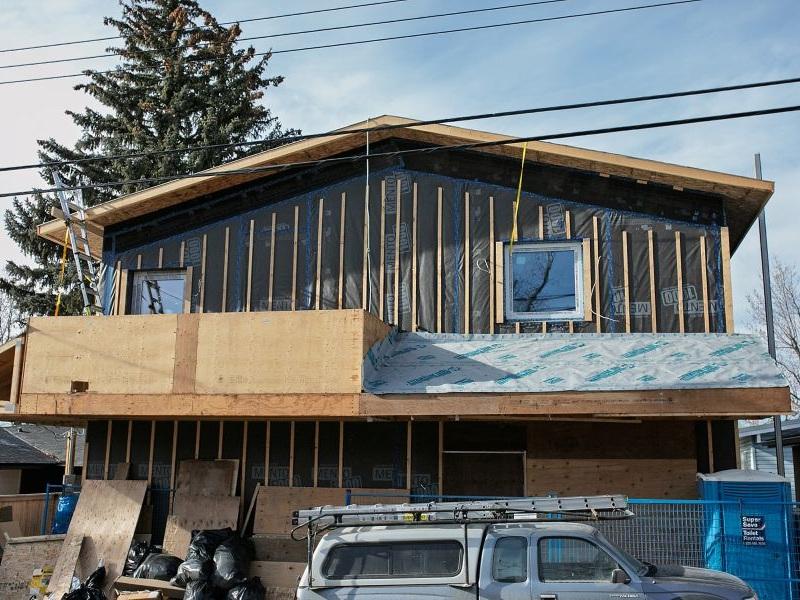
A net-zero, two-bedroom laneway home being built by Calgary-based OnGrid Build will not only be sustainable, but resilient to the elements and generate revenue, its owner Brett Barlow said.
The building is being constructed in the backyard of Barlow’s Calgary home, designed to have net-zero operations and close to zero for embodied carbon.
It is designed to meet those targets with a highly insulated roof and walls, a solar array that can provide approximately 80 per cent of its electricity needs, and the use of low-carbon materials such as straw.
Barlow, who is also the founder of a construction firm named Monument Developments Inc., said in an interview with Sustainable Biz Canada he wants “to be able to stop exploiting resources and climate for my personal gain and turn the tides and start trying to contribute in a positive way” with the home.
The heart and soul of OnGrid, he said, is to provide data-backed solutions for sustainable housing without gimmicks. His goal is to offer such solutions to others.
Resilient, sustainable housing
After years of running Monument, Barlow founded OnGrid with his wife Paige Barlow in late 2024 to build laneway homes that reflect his strong concern over climate change. Also, Barlow reflected on the carbon footprint and material waste from the many projects Monument had built and demolished over the years.
Additionally, his family and businesses needed more room, he added.
The sustainability of the project starts with the choice of materials. There is only a small amount of carbon-intensive concrete in the footings which support the foundation walls. Otherwise, the foundation and walls have no concrete and are made from foam insulation, steel stud and plywood.
Wheat straw fills the prefabricated walls to serve as an insulator, while being fire resistant and acting as a carbon sink. The exterior of the prefabricated, straw-filled roof structure is equipped with solar panels. The windows are triple glazed to boost insulation.
Having saved hardwood, drywall and plywood from past commercial projects, Barlow is using as many of those as possible for his home.
To reinforce the home’s resilience against Alberta’s extreme weather that can range from sweltering summers with wildfire risk to dry, frigid winters, the home is built with fire-rated materials that can resist hail and high winds; weather and vapour barriers to remove moisture; and a roof “over-engineered” for snow loads.
“We thought of all the climate factors that we could think of in the next 100 years at least that Alberta could throw at it,” Barlow said.
This carries sustainability implications, he added, as it translates into spending less on repairs and materials.
Barlow plans to present the home as a case study to pursue more research on sustainable homes with the help of a grant from the Edmonton-based Smart Sustainable Resilient Infrastructure Association.
Meeting growth and climate
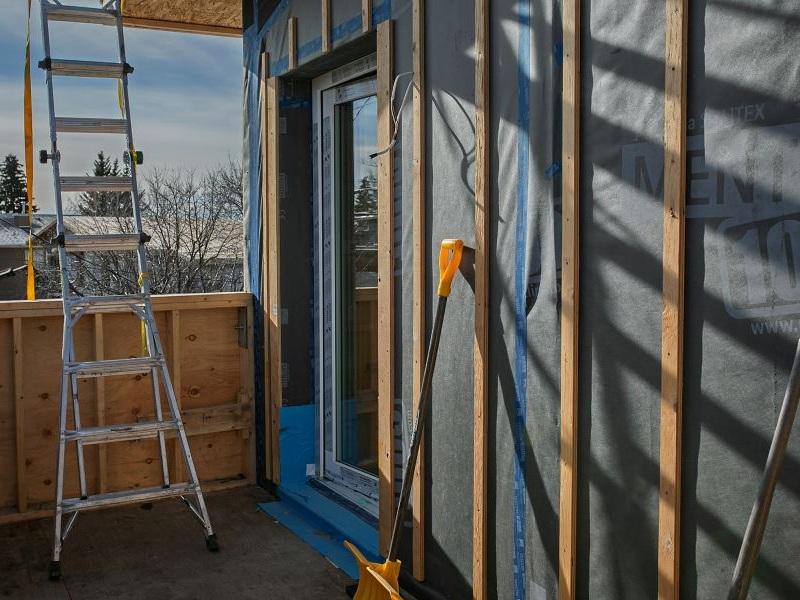
As the first sustainability focused project of Barlow’s, he conducted years of research and partnered with a Calgary engineer who sits on the board of Passive House Alberta to learn about the best practices.
Construction on the home started in July 2025 and is expected to be finished by the end of July 2026. The upper living quarters of the home are to be 840 square feet, while the lower level is to have a shop, garage and office of approximately 900 square feet.
Barlow hopes to offer the laneway homes to other homeowners and developers through OnGrid. He expects future builds to take approximately five months once the construction kinks are ironed out. Barlow sees “a very bright future” for the concept in multifamily housing.
He envisions the laneway homes can help address Canada’s high housing costs by accommodating multigenerational households.
The strategy is “to be able to provide other families these laneway options that aren’t just strictly something they can Airbnb and make some revenue off of,” Barlow said. “They can be a holistic thing to actually provide more financial stability and housing stability.”
While he acknowledges there is a higher upfront cost for his home compared to a conventional laneway build, Barlow said it can be offset in the long-run by selling solar power to the grid and via the home's high energy efficiency.
Barlow said he has met “naysayers” who are “skeptical of the science and the product,” given Calgary’s ties to the oil and gas industry. In response, he focused on making the building look like any other home.
“I just want to try and show people that these are nice, functional buildings,” he said, while offering much more economically and environmentally and enabling family growth.


 Industry Events
 Locations