Locations



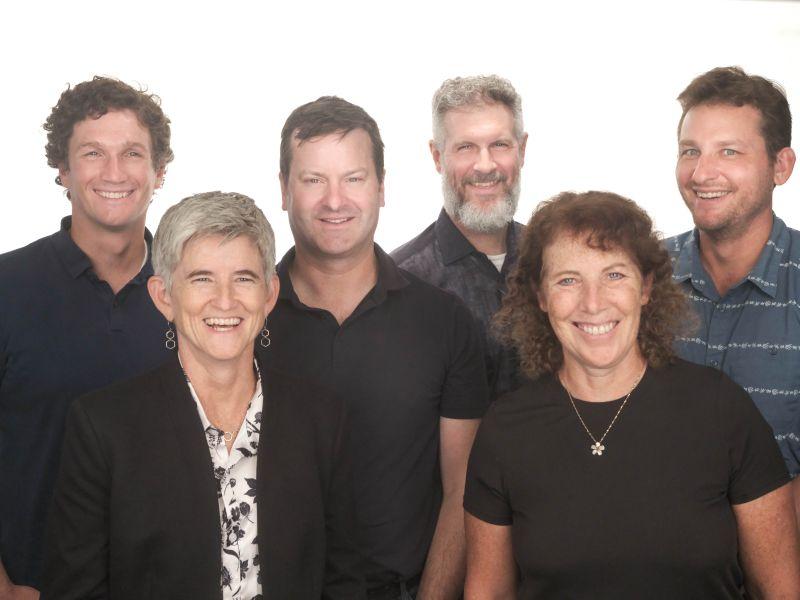
pHathom Technologies Inc., a startup based in Halifax, looks to commercialize the capture of carbon emissions from biomass-burning facilities by securely storing it in the oceans as an economic climate-change solution.
Founded in January 2024, pHathom's technology captures biogenic carbon dioxide from existing coastal biomass facilities and converts it into bicarbonate. The CO2 in the flue gas of biomass power facilities is collected and dissolved in seawater in a reactor, where it reacts with limestone to form calcium bicarbonate.
The chemically neutral calcium bicarbonate can be stable in the oceans for over 10,000 years.
"Once it reaches the ocean, it's no longer CO2 . . . once we convert the CO2 into bicarbonate, the bicarbonate has been demonstrated to be stable in the ocean for tens or hundreds of thousands of years . . . So we're increasing that amount, by the time it's dilute, we're increasing it imperceptibly," pHathom’s CEO and co-founder Kimberly Gilbert said in an interview with Sustainable Biz Canada.
The company has moved fast out the gate, raising $4 million earlier this month and being chosen by Frontier for a prepurchase of carbon removal credits worth US$500,000.
Gilbert believes pHathom’s technology offers compelling efficiency in the nascent carbon removal sector and can benefit the operators of the biomass facilities. The company’s vision is to have a pilot unit running by next year and the capacity to remove one million tons of CO2 per year in the next decade.
Filtering CO2 out of biomass facilities
Educated as a geochemist and chemical engineer, Gilbert was the first employee of the Carbon to Sea Initiative, a non-profit which examines the potential for ocean-based carbon removal solutions.
Energized by the possibilities, she decided to start a company in the sector. Around that time, Gilbert heard about a Halifax-based investor who was also interested: Andrew Ray. Gilbert struck up conversation with him in 2023, and the two realized there was a natural chemistry.
“He had a strong business background, and I had a very strong technical background,” she said. The two decided to found pHathom, with Ray as the chief operating officer. Today, pHathom is a team of 12.
The company’s name is a play on the pH scale and Three Fathoms Harbour, N.S. where Ray resides.
Compared to other carbon removal technologies that deal with the atmosphere or oceans, pHathom’s method is more efficient, Gilbert said. It also does not require infrastructure such as a network of pipes and storage sites to stow away CO2, she added, and the CO2 removal is easy to verify.
Biomass remains a meaningful source of power in parts of the world, including Canada. In 2022, substances such as wood waste and pulping liquid were the source of over one per cent of the country’s electricity generation. In Nova Scotia, biomass made up four per cent of the province's electricity generation in 2021.
The plan is to offer pHathom’s carbon removal service on the voluntary and regulatory markets. “That’s evidence of the sustainability of the sourcing of their biomass,” Gilbert said.
Another expectation is to offer the biomass plant operators a portion of the carbon credit revenue.
From pilot to commercial deployments
To make its first deployment outside of a laboratory, pHathom plans to launch a pilot project in Atlantic Canada in late 2027. It then aims to expand to larger biomass power plants in the region.
“We’re starting very small because that makes us the most agile,” Gilbert said.
The outline of the pilot is to service a biomass boiler in a Nova Scotia college that can produce between 2,000 and 3,000 tons of CO2 per year.
“We are hoping to capture and convert half of that in the first year,” Gilbert said. The pilot unit is expected to generate revenue for pHathom.
The next step is to develop a commercial-scale unit to validate its technology on a larger scale and demonstrate efficiency gains. pHathom is aiming to remove 10 tons of CO2 per day from a biomass energy facility. The hope is to have it operating by 2028 to 2029.
By the early 2030s, the company’s ambition is to have enough of its reactors deployed to remove one million tons of CO2 per year.
Once it reaches that point, it expects it can rapidly scale up by partnering with engineering companies to install its reactors, or by licensing its technology.
The company’s goal is to see the cost of removing a ton of CO2 from biomass drop from the current cost of US$250 to approximately US$100.
Outside of Canada, pHathom’s solution has the makings to work well in countries like Finland, Sweden and the U.S., Gilbert said.
To date, pHathom has received over $12 million in committed funds, split between $8 million in non-dilutive funding and the $4-million equity funding.
A Series A round is expected to be worked on in mid- to late-2026, Gilbert said.



 Industry Events
 Locations