
 Locations






Northland Power Inc. (NPI-T) plans to double its operating capacity by 2030 via wind and energy storage projects which are now under construction, as well as asset acquisitions, according to its 2025 financial report.
The Toronto-based power producer said it aims to reach approximately seven gigawatts (GW) of gross operating capacity by the end of the decade, compared to the 3.5 GW it has currently installed.
The additions are expected to be made up of wind, solar, energy storage and natural gas projects. Total gross investment for the strategy is anticipated to be between $5.8 billion to over $6.6 billion.
Northland “set a clear direction” in the five-year plan which is “focused on maximizing long-term shareholder value,” Christine Healy, the president and CEO of Northland, said in the release accompanying its financial results.
Sustainable Biz Canada has reached out to Northland for comment, but did not receive a reply by time of publishing.
Northland’s current projects
In a presentation for investors released in February, Northland summarized its 2.2 GW of assets under construction: the Hai Long and Baltic Power offshore wind projects outside of Canada, and the Jurassic Solar+ project in Iddesleigh, Alta.
Hai Long, a one GW project being built on the west coast of Taiwan, would be the largest offshore wind farm in Asia when finished, Northland said. The company owns 30.6 per cent of the project. Commercial operations are scheduled to begin in 2027.
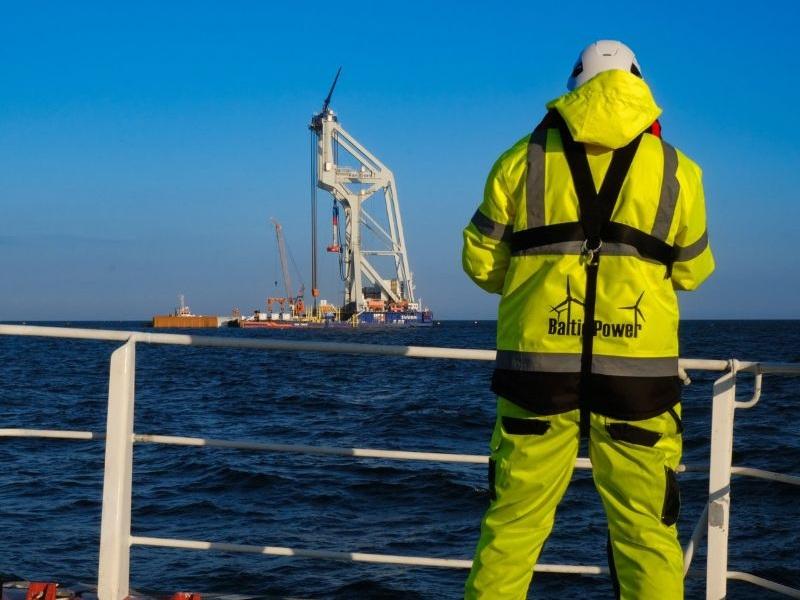
The 1.1 GW Baltic Power project is being built in northern Poland, with Northland having 49 per cent ownership. It is slated to be the country’s first offshore wind project, Northland said. Commercial operations are anticipated to begin in H2 2026.
Jurassic Solar+ is planned as a 220 megawatt (MW) solar project paired with an 80 MW battery energy storage system. The battery component is expected to start operating in late 2026, while a date for the start of operations for the solar farm has yet to be disclosed. Northland owns 100 per cent of the project.
Northland’s pipeline
To add the 1.4 to 1.8 GW of capacity needed to meet its seven GW ambition, Northland aims to initiate asset acquisitions, value enhancement projects and organic growth. It outlined a 9.2 GW pipeline of opportunities from the early to late stages to help meet its 2030 plan.
In the late stages of development are two Polish energy storage projects it acquired last November with a total of 300 MW of capacity, and the 100 MW High Bridge wind project in New York state.
Mid-stage possibilities are onshore renewables in Canada, offshore wind in the U.K., battery energy storage in Spain and value enhancement projects. Northland pegs this stage at 2.3 GW of total capacity.
In early development are 6.5 GW of opportunities. Northland lists onshore renewables in Canada, renewables in New York state, projects in Southeast Asia and a natural gas asset in Canada as some potential developments.
Northland saw high demand in 2025
In its Q4 financial results, Northland reported gains in revenue from energy sales and net income compared to the same period last year. Revenue from energy sales was approximately $732 million, over 26 per cent higher than 2024. Net income was almost $290 million, up approximately 93 per cent year-over-year.
The company saw gains in revenue from energy sales compared to last year due to higher production from its offshore wind facilities in Europe, the Oneida energy storage project in Ontario commencing operations, and higher demand for power from its natural gas assets.
While the $2.4 billion in revenue from energy sales for fiscal year 2025 was almost four per cent higher than in 2024, Northland reported a net loss of approximately $108.3 million in 2025 compared to net income of $371.4 million in 2024.
In its management discussion and analysis, Northland attributed the net loss to factors such as a $527-million impairment expense for the Nordsee One wind facility and fluctuations in foreign exchange rates.


 Industry Events
 Locations