Locations






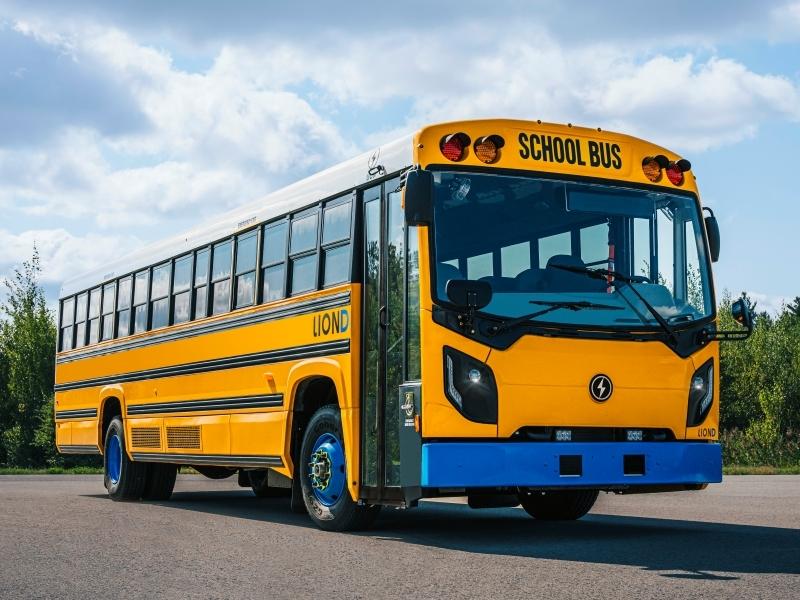
Prince Edward Island is a mile ahead of five provinces in adoption of electric school buses, showing a “highly uneven national landscape,” a report by the Canadian Electric School Bus Alliance says.
In the first Electric School Bus Report Card, the alliance looked at how far along Ontario, Quebec, British Columbia, Alberta, New Brunswick and Prince Edward Island were on four areas: fleet electrification progress, policy and regulatory goals, funding and incentives, and charging infrastructure development.
Prince Edward Island received the highest grade of the group with 313 points out of 400 for its leadership in centralized fleet ownership, early procurement investments and setting clear targets.
Quebec was next at 271 points, followed by British Columbia with 210 points. New Brunswick was fourth with 168 points, while Ontario and Alberta were at the back of the pack with 101 points each.
“This report card shows that, where governments decide to act with clear goals, electric buses hit the roads,” Henri Chevalier, lead author of the report, said in a release.
The alliance is coordinated by Peterborough, Ont.-based non-profit Green Communities Canada and was developed in partnership with Montreal-based non-profit Équiterre. Its members include non-profits, companies and governments.
Where Canada's provinces are on school bus electrification
Though Canada’s smallest province, Prince Edward Island is leading the country proportionately with 33 per cent of its school bus fleet being electric models. It also has 145 bus chargers, earning the province the highest score possible for charging infrastructure development.
The province has pledged to decarbonize its school bus fleet by 2030, including a goal to electrify half of its school buses by 2027.
On the funding front, the Prince Edward Island and Canadian governments invested $40.3 million from 2021 to 2024 toward electric school buses and related infrastructure.
There were a few stumbles, however, such as the province’s government cancelling tenders for new electric buses and opting to buy diesel buses in the 2026 capital budget. There is also a stalled vehicle-to-grid program.
Like Prince Edward Island, Quebec excelled at charging infrastructure, but fell short on other criteria.
Its school bus fleet electrification was 15 per cent, or 1,606 vehicles. It makes Quebec “the national leader in absolute (electric school bus) deployment numbers,” the report states.
Quebec is also notable for a school bus target the Canadian Electric School Bus Alliance calls “one of the clearest in the country.” The province has set a target to electrify 65 per cent of its school bus fleet by 2030.
Quebec has some of the strongest financial incentives in Canada, albeit without dedicated funding streams or equity accommodations.
British Columbia ranked behind Quebec for reasons such as a slower uptake of fleet electrification (five per cent) and not having set a target date for school bus electrification.
The lowest-ranked provinces – New Brunswick, Ontario, Alberta – were farthest behind on factors such as fleet electrification (as low as 0.02 per cent in Alberta) and provincial funding support, often earning zero points for some of the four areas.
The remaining Canadian provinces and territories received an overall score of zero for lacking major electric school bus criteria to judge, such as having no regulatory frameworks or infrastructure planning to date.
Additional funding needed to accelerate transition, alliance says
The Canadian Electric School Bus Alliance argues for the benefits of electric school buses across the environment, health and economy.
Despite the benefits, there are few electric school buses on the road today – under 2,000 in Canada, representing 3.8 per cent of the nation's school bus fleet.
Part of the problem is the high cost of an electric school bus. An electric school bus costs approximately 2.6 times more than its diesel counterpart before subsidies, the report states.
To boost the uptake, the Canadian Electric School Bus Alliance urges the federal government to set aside at least $250 million per year through the Canada Public Transit Fund.
Accelerating a fair and effective transition, the report says, “will require aligned targets, significant federal, provincial and territorial coordination, long-term funding certainty, clear regulatory pathways and technical support mechanisms.”
“We cannot simply hope that the school bus fleet will electrify by magic. That a new electric model costs 2.6 times as much as a diesel model is an undeniable reality, but so is political inertia,” Chevalier said.
“Now more than ever, we need clear financial commitments from the federal government.”



 Industry Events
 Locations