
 Locations





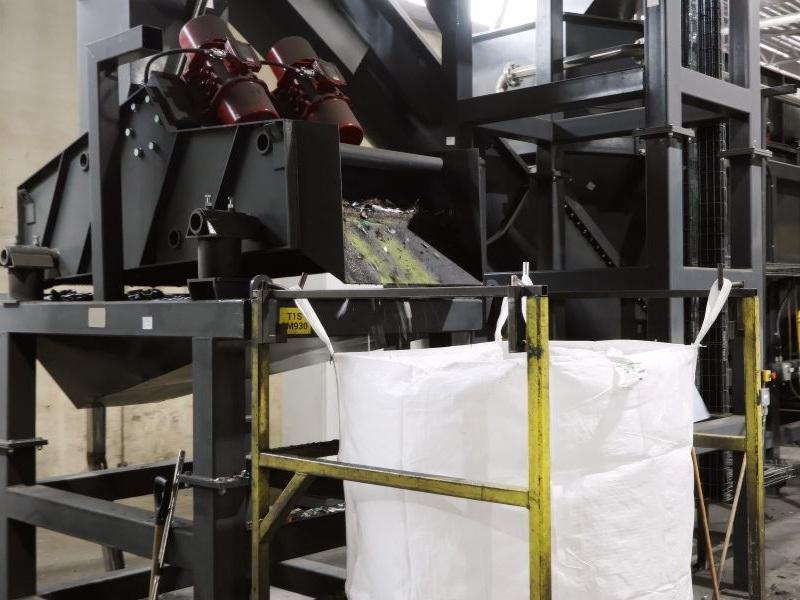
Quantum Lifecycle Partners has inaugurated a plastics recovery line at its Toronto electronics recycling facility, allowing it to separate plastic polymers and the contaminant chemicals in e-waste so the plastics can be reused.
The new $4-million line, which was fully opened today, sits at the end of a shredding system which has been in place since 2018. Capable of producing two to three tonnes of plastic flakes per hour, the Advanced Plastics Recovery Line is enhancing the 120,000-square-foot facility which can process hundreds of thousands of pounds of materials per day.
“For Quantum, it allows us to have better visibility to the end home of our products. And by extension, our customers have better visibility to the end home of their commodities,” Clayton Miller, the vice-president of recycling at Quantum, said about the line in an interview with Sustainable Biz Canada.
Headquartered in Toronto, Quantum handles and recycles end-of-life IT equipment across various sectors and organizations such as banks, telecoms and municipalities. It operates 14 facilities in Canada, the U.S. and Costa Rica with over 700 employees.
Solving a plastic recycling conundrum
Part of the reason why plastics recycling rates are abysmal is because of the blends, Miller said. The presence of various polymers, which have unique properties and contain fire retardant chemicals, means a company would contaminate a batch if they were melted down.
“Ultimately you can’t mix all those plastics together, melt them out and extrude it into a new bench. They need to be separated by polymer type in order to be re-extruded,” Miller said.
For most of its existence, Quantum recycled electronics and produced mixed plastic, he said, which were sent to companies abroad for further refining.
But with recent changes to regulations surrounding e-waste, specifically the Basel Convention which sets rules for hazardous waste, there is a greater focus on domestic processing. Additionally, the Canadian government is looking to onshore end-of-life material processing and build a more circular economy, Miller added.
The sink-float system

The sink-float system in the new Quantum line is designed to remedy this problem.
After the electronics are shredded and washed, Quantum will sort plastics based on density using water. Lower-density plastics such as polyethylene will float, while denser plastics such as ABS will sink. The sink-float system divides mixed plastic streams into three kinds of polymers that can be sold as plastic flakes for processing into a manufacturing-ready product, Miller explained.
Those flakes can be sent to plastic recycling companies to produce pellets for reuse, he continued. Companies are highly interested in Quantum’s plastic flakes and plan to create higher-value products, Miller said when asked how the company will attempt to ensure it will not be sent to landfills.
“What we’re creating is a globally saleable commodity that can be used in any application that needs those commodities.”
Quantum can service companies under Ontario’s extended producer responsibility (EPR) policy for electronics, Miller said, and could scale the facility according to demand.
“This is almost like a foundational piece to the wider goal that we have in Ontario through competitive EPR, setting up a circular economy versus a linear one,” he explained.
The Advanced Plastics Recovery Line is one of the few sink-float systems in Canada, Miller said, and likely one of the largest in the country. It is Quantum’s first sink-float system as well.
Canada's plastic problem
The line Quantum is adding to the Toronto facility can help make a dent in the millions of tonnes of plastic that are thrown away every year in Canada. Only a fraction is recycled; seven per cent in 2021, according to the Canadian government.
Quantum recycles over 80 million pounds of e-waste per year, the company said, helping to avoid 100,000 tonnes of carbon dioxide emissions.
The company plans to have more recycling solutions in Canada, Miller said, and is also looking to expand into the U.S.



 Industry Events
 Locations