Locations
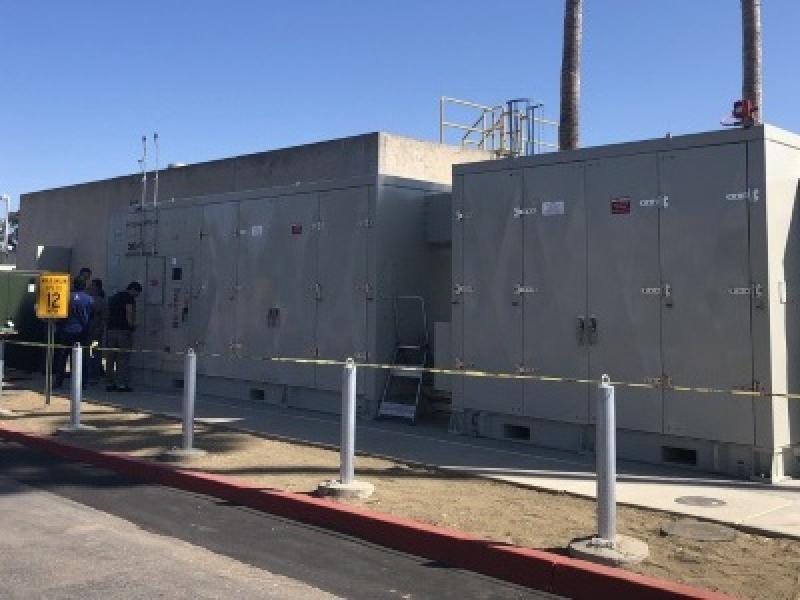






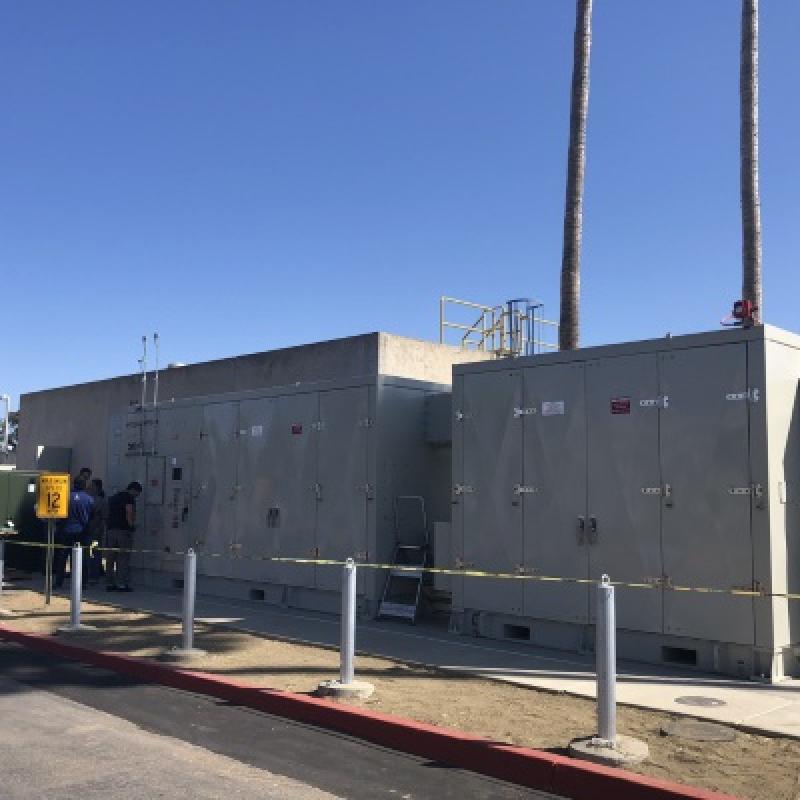
Ontario could turn to batteries installed at commercial and industrial sites to help meet rising electricity demand, but changes to provincial policies are needed to make the systems a larger source of grid capacity, Energy Storage Canada says in a new report.
The province is procuring hundreds of megawatts of grid-scale energy storage, including the Hagersville Battery Energy Storage Park and Skyview 2. But the province is also facing a potential electricity supply crunch as demand grows and nuclear generating capacity is taken offline for refurbishment.
There is “another group of storage resources that we really haven’t tapped into,” Justin Rangooni, president and CEO of Toronto-based Energy Storage Canada, said in an interview with Sustainable Biz Canada.
Energy Storage Canada, an industry group, is calling on the Ontario government to support greater use of behind-the-meter (BTM) batteries in its report, Unlocking Distributed Storage Resources: Diversifying Ontario’s Procurement Strategy.
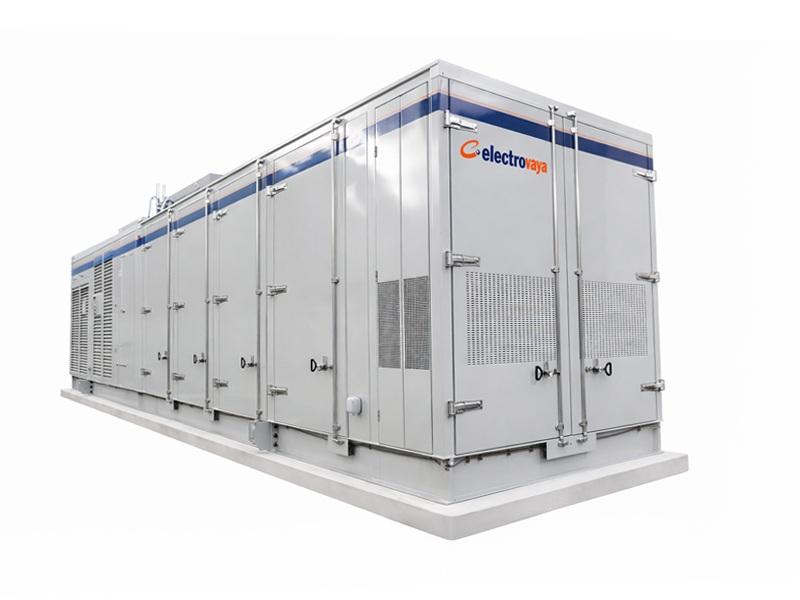
BTM batteries are installed at commercial and industrial sites, where electricity can be generated, stored and used locally as part of a distributed energy resource system. These resources can be brought online quickly to help Ontario's grid ease the province's projected leap in electricity demand, Energy Storage Canada said.
Changes to how BTM battery owners are compensated is critical to meet this potential, the group concludes.
BTM batteries can be installed quickly
The Independent Electricity System Operator (IESO), Ontario’s power system manager, projects 65 per cent growth in electricity demand by 2050. Furthermore, the province is refurbishing its nuclear fleet which is expected to take approximately 2,100 megawatts (MW) of baseload capacity offline.
The report says that growth will require “fast, flexible, and modular capacity that can be deployed incrementally as demand materializes,” characteristics it says match distributed BTM storage.
“Here is a resource, one that could already be installed,” Rangooni said, “or even if it’s new, can be built relatively quickly.”
The assets could be deployed within 12 to 24 months, with hundreds of megawatts of capacity already installed and connected to the Ontario distribution system, Rangooni said. By comparison, new gas peaker plants need five or more years from procurement to commissioning, according to the report.
Despite the promise of BTM batteries, there are obstacles to the technology’s mass adoption.
Under Ontario's current framework, batteries are treated as a tool for customer bill management, rather than firm, dispatchable capacity, Energy Storage Canada says in the report. Thus, batteries use only around 20 to 30 per cent of their available cycling capability, constraining reliability and limiting capital formation.
Additionally, current market structures make revenues available to BTM batteries significantly short of what is needed to finance distributed storage at infrastructure scale. This heavily limits infrastructure-scale capital formation.
An analysis in the report found a gap of approximately $150,000 to $190,000 per megawatt in value that batteries could provide to the grid but cannot access or be compensated for under the current regulatory regime.
Making an initial procurement
To overcome these hurdles, Energy Storage Canada recommends an initial procurement of 100 to 500 MW of BTM batteries through eight- to 10-year contracts. The report says the capacity could be deployed within 12 to 24 months using existing technology and private capital, without requiring new transmission infrastructure, helping to narrow the financing gap.
Other recommendations are: meter aggregation across battery portfolios, lower wholesale market participation thresholds, faster interconnection and coordinated dispatch signals.
These policies could “provide another great tool, we believe, for the (IESO) to utilize,” Rangooni said. By building a stronger financial case for BTM energy storage, more of the assets could be brought online, he added.
For ratepayers, better use of BTM batteries could reduce costs related to peak-related systems.
With the Ontario Energy Board and IESO signalling interest in distributed batteries, Rangooni hopes the paper can help inform those discussions.



 Industry Events
 Locations