


 Locations




Low-carbon hydrogen producer Charbone Corp. (CH-X) plans to focus on the tech, pharmaceutical and aerospace sectors from 2026-30, with global expansion of its industrial gas production and distribution also in play.
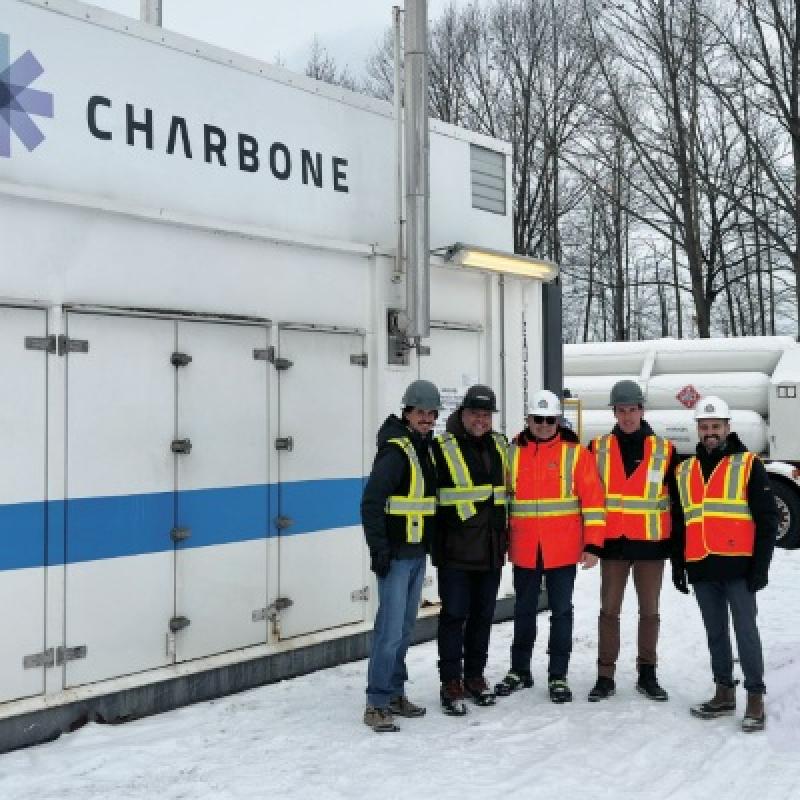
Based in Brossard, Que., Charbone produces gases such as Ultra High Purity (UHP) hydrogen, helium, oxygen and nitrogen. In Sorel-Tracy, a city north of Montreal, the company produces UHP hydrogen on a commercial scale.
Charbone looks to supply companies in industries such as semiconductors, artificial intelligence and data centres, advanced pharmaceuticals, and aerospace and defence as part of its strategic plan for 2026-30.
“We are now confirming that we can be able to provide to industrial sector customers that we’re targeting all the different industrial gases that they would need,” such as UHP hydrogen, Benoit Veilleux, the CFO and corporate secretary of Charbone, said in an interview with Sustainable Biz Canada.
Last December, Charbone started commercial-level UHP hydrogen production from its Sorel-Tracy facility. Today, the company can produce 200 kilograms of the gas per day, Veilleux said, and is working toward one-tonne-per-day production. The gas has uses in the semiconductors, defence and pharmaceutical industries, he explained.
UHP hydrogen is made using an electrolyzer, a machine that splits water into oxygen and hydrogen, powered by renewable electricity. Compared to hydrogen made by splitting natural gas, Veilleux said Charbone’s UHP hydrogen has almost no carbon footprint.
Two-pillar strategy in North America
Charbone’s 2026-30 strategy in North America is made up of two pillars.
The first is focused on UHP and specialty gases such as helium for high-margin industries. The second is industrial and atmospheric gases such as oxygen, nitrogen, carbon dioxide and industrial blends for a stable revenue base in industrial applications like welding or oil and gas.
A notable omission from its list is transportation. Hydrogen has been explored as a means of decarbonizing the fuel for vehicles such as trucks and ships. After a period of strong interest that was seen in Canada with several big projects planned for Atlantic Canada, uptake of low-carbon hydrogen has been stifled by high costs, uncertain demand and slow infrastructure development, the International Energy Agency said in a 2025 report about the sector.
Charbone is having “good results by focusing on the actual applications, the real end-users buying right now,” Veilleux said, as opposed to supplying a transportation sector that lacks the infrastructure for commercial-level hydrogen use. The company aims to supply the transportation sector when its uses are more viable, he continued.
Charbone has a network of over 60 customers in Canada and the U.S., Veilleux said.
In October 2025, the company announced a five-year agreement to supply UHP hydrogen to an unnamed Ontario firm. In February, Charbone disclosed it secured orders for UHP hydrogen and oxygen from a client in New York state.
Charbone’s global expansion strategy
Alongside its gas production, Charbone has set out to add six to eight regional hubs in North America, Europe and Asia, Veilleux said. The hubs will be focused on distribution, storage and customer access, with flexibility for additional hydrogen production. The new hubs are expected to shorten time-to-market, foster stronger customer relationships and reduce logistics costs.
A hub planned for Malaysia, for example, would focus on the Asian market for semiconductors and electronics. Charbone plans to make an announcement about its Malaysian facility “shortly,” Veilleux said.
Charbone is maintaining its plan to develop up to 16 modular UHP hydrogen production sites across North America, he said.
In 2025, Charbone announced it signed for a project finance facility of up to US$50 million to fund its plan for modular green hydrogen facilities on the continent.


 Industry Events
 Locations
