Locations







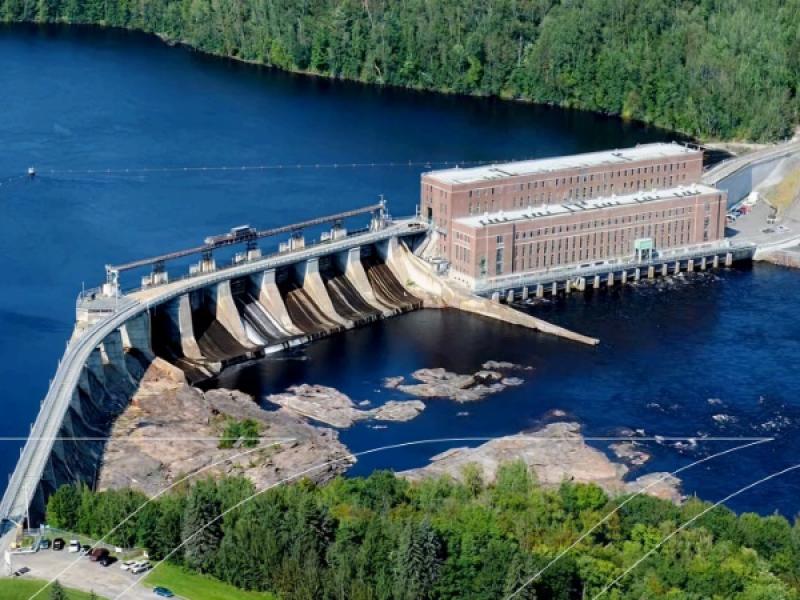
The benefits of hydropower are not fully captured in the typical metric used to calculate the lifetime cost of renewable energy assets, thus overstating its cost according to a report by WaterPower Canada.
Titled The True Value of Hydropower, the Ottawa-based industry association argues levelized cost of energy (LCOE), a way to compare the average cost of electricity generation over the lifetime of an energy source, is not best suited for hydropower.
A hydroelectric dam tends to operate decades longer than the average wind or solar installation, for example, which WaterPower Canada says is not accounted for in LCOE.
If adjustments are made to account for its qualities, hydropower becomes cheaper than wind or solar per megawatt-hour, the report states.
Hydropower “should be looked at in a new light, particularly given the huge advantage and synergies you can get,” Lorena Patterson, the president and CEO of WaterPower Canada, said in an interview with Sustainable Biz Canada.
Where LCOE misses with hydro
Hydropower is Canada’s main source of electricity, responsible for over 60 per cent of the country’s generation in 2022 according to federal data.
But WaterPower Canada, which represents almost all of Canada’s hydropower industry, feels it can be overlooked in the conversation about renewables and net-zero targets, Patterson said. There is a perception it is expensive and difficult to build.
Part of that is because of LCOE, the common financial model used to compare energy projects, she said. LCOE models typically operate under the expectation of the asset’s lifespan being 20 to 40 years, a good match for solar panels or wind turbines. But some of Canada’s hydroelectric dams were built over 100 years ago and can operate another 100 years with good maintenance, Patterson said. This longevity is not captured in LCOE and inflates its cost.
When comparing hydropower to solar and wind, it “should also take into account the number of times you would have to replace those facilities over a 100-year lifespan,” Patterson said.
The report also notes LCOE does not account for capacity value, a way of measuring reliability during times of peak demand. Hydropower can provide a firm supply of electricity at peak demand, which reduces the need to draw upon additional capacity, the report says.
“As you get some of these intermittent sources of power on the grid in larger volumes, the impact on the grid itself is... it can be unstable at times if you don’t have enough dispatchable power,” Patterson said. This would mean spending more on backup capacity, for example, adding to the costs.
Hydro's complementary strength

When WaterPower Canada adjusted LCOE to account for factors such as capacity value and the replacement costs, hydropower became more economically competitive.
Before the adjustments, the price per megawatt-hour for hydropower was almost $140, higher than solar at just under $100 and wind at almost $90. After adjustment, hydropower came out to under $100, with solar at over $190 and wind at under $120.
WaterPower Canada is not arguing hydropower is better than wind and solar, Patterson said, but complementary.
The report’s findings could help policy makers and regulators overcome the hurdle of the higher initial capital costs for hydropower, she added.
It also highlights the advantages of hydropower, Patterson said, particularly at a time when there is a focus on energy security and the transition from fossil fuels.
“It’s very simple. It’s a mechanical process. It’s not new. It doesn’t require a whole bunch of R&D. We know it works.”
The energy source has potential for more development and refurbishment opportunities, she said. WaterPower Canada identified almost 30 investments into refurbishment and modernization planned or in progress across Canada in its 2025 year-end report. Innovations such as run-of-river and pumped hydro could add more capacity and reliability, for example, Patterson noted.
In terms of some new projects, the Iqaluit Nukkiksautiit Hydro Project planned for Nunavut has been referred to by the federal Major Projects Office. The Ontario government plans to work with First Nations to expand hydroelectric generation, including the opportunity for two hydroelectric stations which, combined, could produce up to 430 megawatts.




 Industry Events
 Locations