Locations




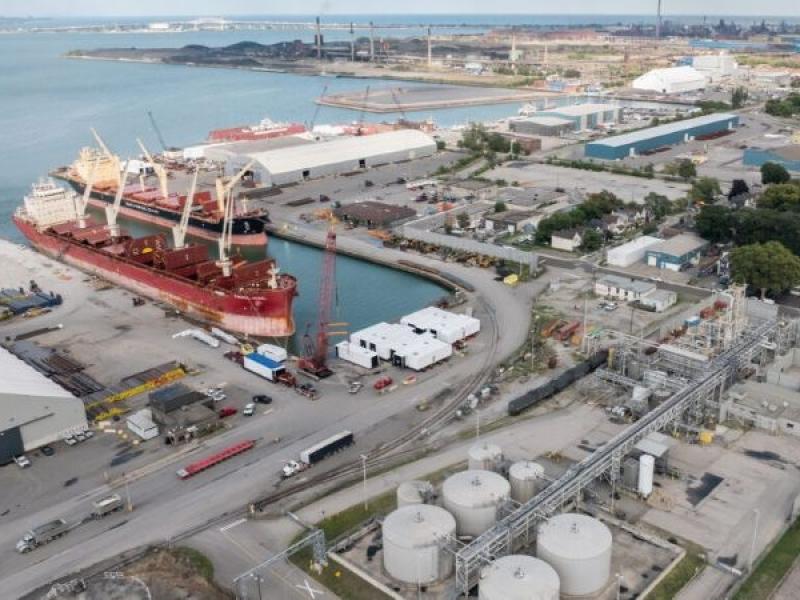
A Hamilton, Ont. biodiesel project that was put on hold for over a year is being restarted under new ownership: an Indigenous economic development corporation and the operating team of the facility.
The facility was built by BIOX Corporation in 2005 and sold to U.S. firm World Energy. Now, the Mississaugas of the Credit Business Corporation (MCBC) owns 51 per cent of Biidaaban Renewable Energy, the company which is slated to operate the project.
The remaining stake is owned by a group which includes Tim Haig, the incoming president and CEO of Biidaaban Renewable Energy, who was the CEO of BIOX.
Animal fats and cooking and seed oils from Ontario businesses are to be the feedstock for the facility located in the Port of Hamilton, which has the capacity to output 67 million litres of biodiesel per year.
That much fuel can offset approximately 130,000 tonnes of carbon emissions per year, according to a June release from HOPA Ports which acquired the facility after it was closed in the fall of 2024.
“One of our goals is involvement in renewable energy . . . It’s within the First Nations’ values for environmental and land stewardship,” Warren Sault, president and CEO of MCBC, said in an interview with Sustainable Biz Canada.
The MCBC represents the business development interests of the Mississaugas of the Credit First Nation.
A new day for Hamilton biodiesel site
The Inflation Reduction Act and the tariffs championed by U.S. President Donald Trump impacted the project, leading to the change of ownership, Haig said in an interview with Sustainable Biz Canada.
However, new policies in Canada made the project viable again. Ontario’s government tweaked fuel blending requirements to increase demand for Canadian biodiesel. Federally, there were updates to clean fuel policies and steps taken to support domestic biofuel production.
“We got caught up in these crazy tariff changes and things going on with the States,” Haig said. “We were able to get the ear of the politicians and bureaucrats, so we set up a situation that’s gonna be able to make it work for all the stakeholders.”
The revival of the complex is reflected in its new name. Biidaaban means “a new day” in the Anishinaabe language, Sault said.
The biodiesel from the plant is to be blended with regular diesel for use in shipping and trucking, Sault said, and sold to large fuel suppliers.
Biidaaban Renewable Energy has secured a long-term lease for the land, the facility and its assets. Production is expected to start in August.
Biodiesel production set to rise in Canada
The MCBC is interested in the renewable energy sector because it aligns with its land stewardship values, Sault said. It was a development partner in the 250-megawatt Onedia Energy Storage project, one of Canada’s largest grid-scale battery storage developments.
The economic development arm of the Mississaugas of the Credit First Nation is interested in developing renewable energy, energy storage and transmission line projects, Sault said.
The MCBC is not the only Indigenous organization to have a stake in renewable fuel projects. The Siksika Nation in Alberta joined forces with Reconciliation Energy Transition Inc. on a $600-million sustainable aviation fuel refinery in 2022.
Biodiesel production capacity was steadily on the rise in Canada, federal data shows, going from 258 million litres in 2010 to 704 million litres in 2019. In 2024, Canada produced an estimated 460 million litres of biodiesel, the Canadian government said. The country’s biodiesel sites have historically operated below capacity because of competition from the U.S., it noted.
More renewable diesel projects are scheduled to begin operations, which could potentially triple Canada’s production capacity, the federal government said.


 Industry Events
 Locations